
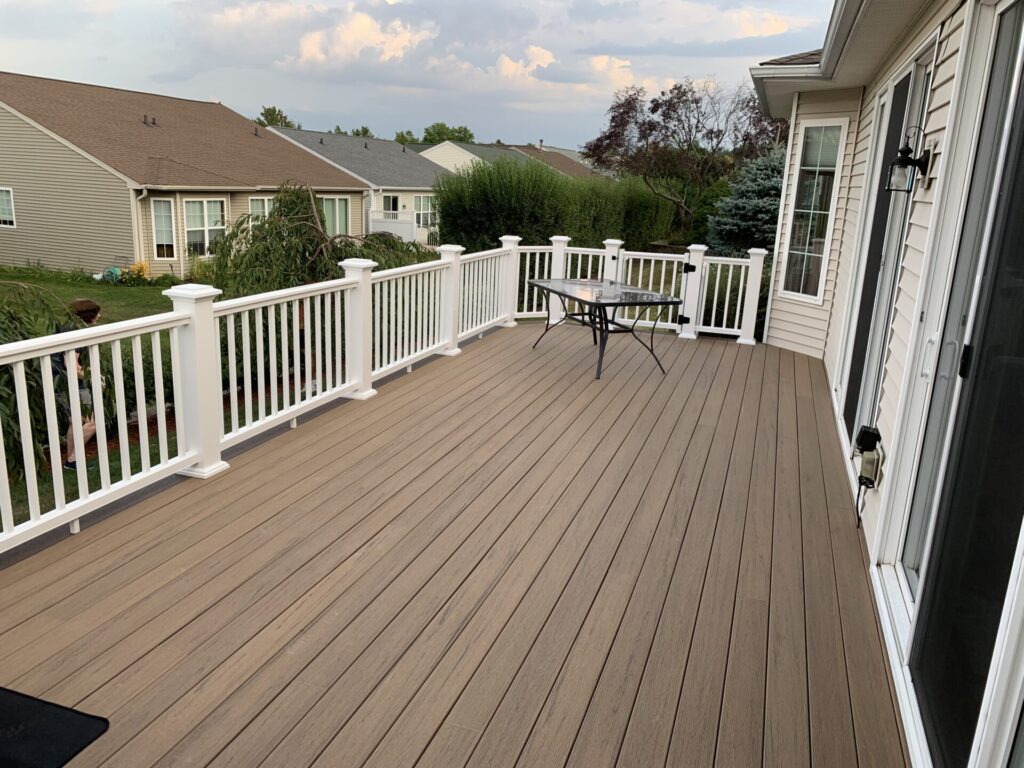
You’ve decided you want a composite deck. Now what?
Choosing composite instead of traditional wood is only one decision in the deck-building process. Before construction begins, there are several things homeowners should consider that can have a major impact on how their finished deck looks, functions, and fits their property.
At Brad Beller Construction, we build custom decks throughout Crystal Lake, Algonquin, Woodstock, Huntley, Hawthorn Woods, McHenry County, and surrounding Northern Illinois communities.
Here are some of the most important things to think about before starting your composite deck project.
1. Start With How You Want to Use Your Deck
Before choosing a color or railing style, ask a more important question:
What do you actually want to do on your deck?
A deck designed primarily for two people to relax outside will look very different from one designed for large family gatherings.
Consider whether you need space for:
- Outdoor dining
- A grill
- Lounge furniture
- Entertaining
- Planters
- A future outdoor kitchen
- Multiple seating areas
- Access to a pool or yard
- Everyday family use
Knowing how you want to use the space helps determine nearly every design decision that follows.
2. Determine the Right Deck Size
One of the easiest mistakes to make is choosing deck dimensions without considering what needs to fit on it. A deck can sound large on paper and still feel cramped once furniture is added.
Think about your outdoor dining table with the chairs pulled out. Consider how much room your grill needs. Picture your lounge furniture in place.
Then think about walking space. You don’t want guests squeezing between furniture or navigating around the grill every time they walk into the yard.
A well-designed deck balances usable square footage with the proportions of your home and backyard.
3. Pay Attention to Your Property
Your backyard plays a major role in deck design.
All properties aren’t just flat, rectangular lots. Elevation changes, landscaping, existing patios, mature trees, property layouts, and the location of doors and windows can all affect your options.
A sloped yard, for example, may lend itself to an elevated or multi-level deck.
The goal shouldn’t be to force a standard deck design onto your property. The design should work with your property.
4. Consider Sun and Shade
Where does the sun hit your backyard in the morning?
What about at 3:00 in the afternoon?
Sun exposure can influence where you place dining areas, seating, and other features. It can also be worth considering when selecting decking colors.
Before finalizing your design, spend some time observing your backyard at different times of day.
That little bit of homework can make your finished outdoor space much more comfortable.
5. Choose Your Composite Decking Carefully
“Composite decking” isn’t one single product.
There are different product lines, colors, textures, board profiles, performance characteristics, and price points to consider.
Brad Beller Construction works with trusted decking brands including TimberTech® and AZEK®, giving homeowners access to a variety of options for creating a low-maintenance outdoor space.
When comparing decking, don’t choose based on color alone.
Consider:
- Appearance and texture
- Maintenance requirements
- Moisture resistance
- Fade and stain resistance
- Warranty
- Overall performance
- How the color complements your home
Your contractor can help you compare options based on your property, budget, and priorities.
6. Don’t Treat Railings as an Afterthought
Railings are obviously important for safety, but they’re also one of the most visible design features of an elevated deck.
The right railing can completely change the finished appearance.
Brad Beller Construction uses Westbury® railing systems, which can provide a clean, finished look while offering the durability homeowners expect from an outdoor product.
Consider how your railing will coordinate with your decking, home exterior, and view from the deck.
Sometimes contrast creates the best result.
7. Think Carefully About Stair Placement
Stairs don’t just get you from the deck to the yard.
They control how people move through your entire outdoor space.
Poor stair placement can interrupt furniture layouts or send foot traffic through areas where you’d rather have seating.
Good stair placement can naturally connect your home, deck, lawn, patio, pool, garden, or other outdoor features.
It’s worth thinking about this early in the design process instead of simply placing stairs wherever they happen to fit.
8. Understand What’s Underneath the Decking
Homeowners naturally focus on the part of the deck they’ll see every day.
But some of the most important components are underneath it.
Framing, structural connections, footings, fasteners, and other components all contribute to the safety and longevity of the finished structure.
Brad Beller Construction uses trusted building products including FastenMaster® and Simpson Strong-Tie® as part of our commitment to quality construction.
A beautiful composite board doesn’t compensate for poor construction underneath it.
Quality matters from the structure up.
9. Plan for Weather
Decks in Northern Illinois, for example, experience a little bit of everything.
Hot summer sun.
Heavy rain.
Freezing temperatures.
Snow and ice.
Repeated freeze-thaw cycles.
Those conditions make material selection, drainage, structural construction, and installation especially important.
Your deck isn’t being built for one beautiful summer afternoon. It needs to perform through changing Midwest seasons year after year.
10. Know That Local Building Requirements Matter
A deck is a structural addition to your home, and local requirements may affect how it can be built.
Depending on your municipality and project, considerations may include permits, setbacks, footings, railings, stairs, structural requirements, and inspections.
Requirements can vary between communities, which is another reason working with an experienced local deck contractor is valuable.
Brad Beller Construction serves homeowners throughout Crystal Lake, Algonquin, Woodstock, Huntley, Hawthorn Woods, McHenry County, and surrounding areas, and understands that every project and property needs to be evaluated individually.
11. Don’t Design Only for Today
Your family and lifestyle may change long before your composite decking reaches the end of its useful life.
Think ahead.
Could you want an outdoor kitchen someday?
Might you add a patio?
Would wider stairs be useful as you get older?
Could your family grow?
Would additional entertaining space become valuable?
You don’t need to build every future feature today, but discussing future possibilities during the design phase can help prevent today’s decisions from limiting tomorrow’s options.
A Great Composite Deck Starts With Good Planning
The best deck projects don’t begin with picking a board color.
They begin with questions.
How will you use the space? How does your property affect the design? Where should the stairs go? What materials make sense? How much room do you actually need?
Taking the time to answer those questions helps create an outdoor space that doesn’t just look great when construction is finished—it works for your family for years to come.
If you’re considering a custom composite deck in Crystal Lake, Algonquin, Woodstock, Huntley, Hawthorn Woods, McHenry County, or surrounding Northern Illinois communities, Brad Beller Construction can help you explore your options.
Ready to Start Planning Your Composite Deck?
Call Brad to discuss your property, ideas, and deck project.
📞 847.772.4455
🌐 bradbellerconstruction.com


